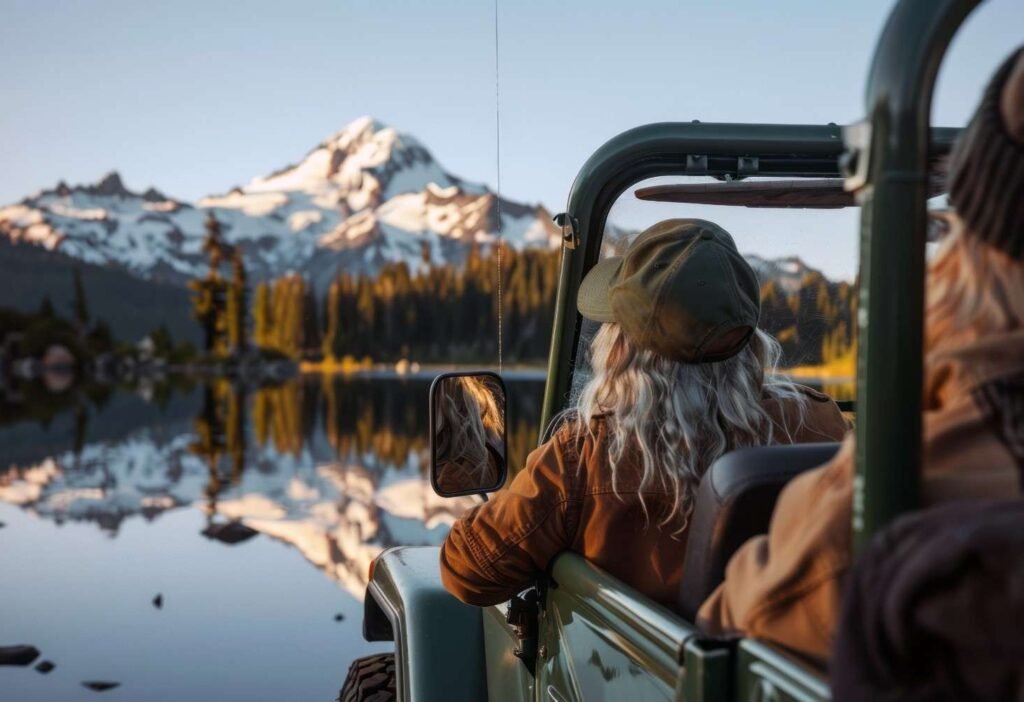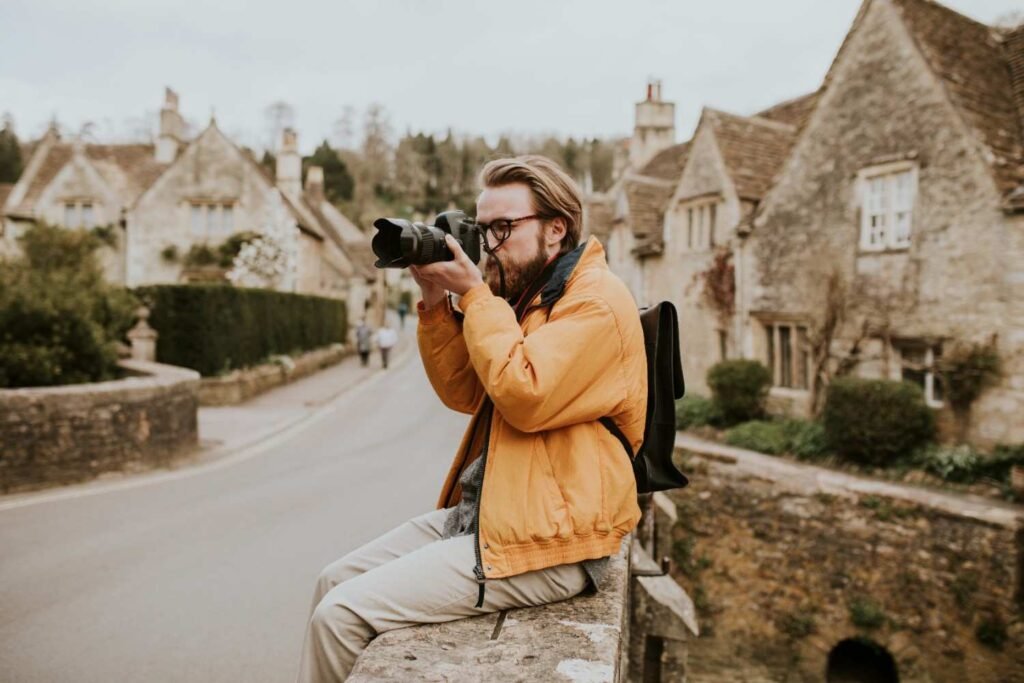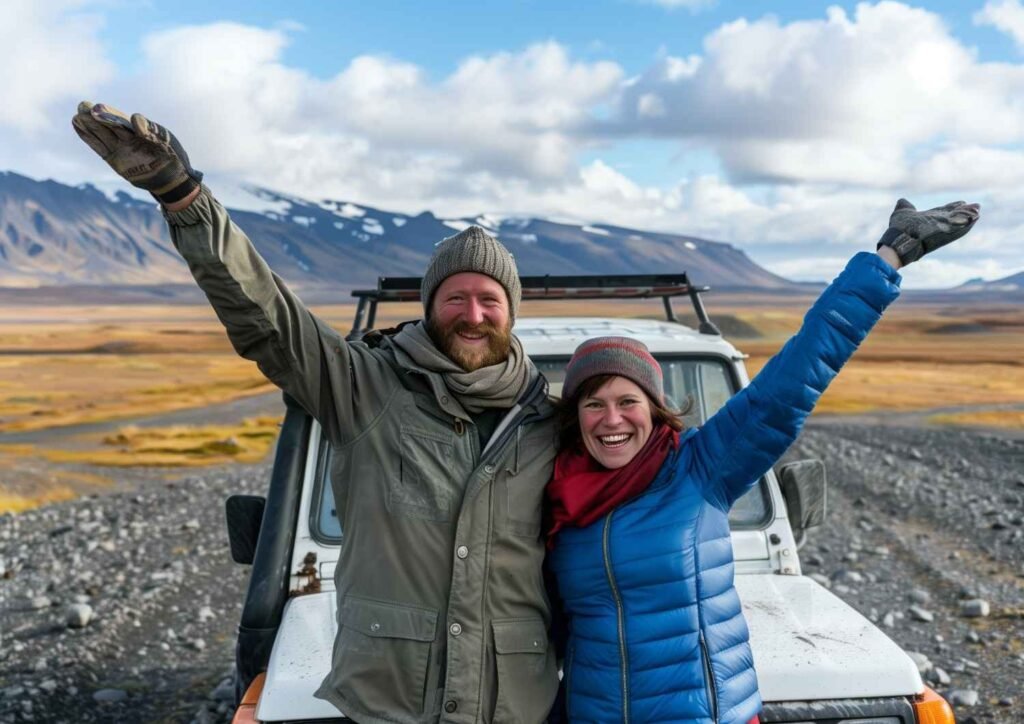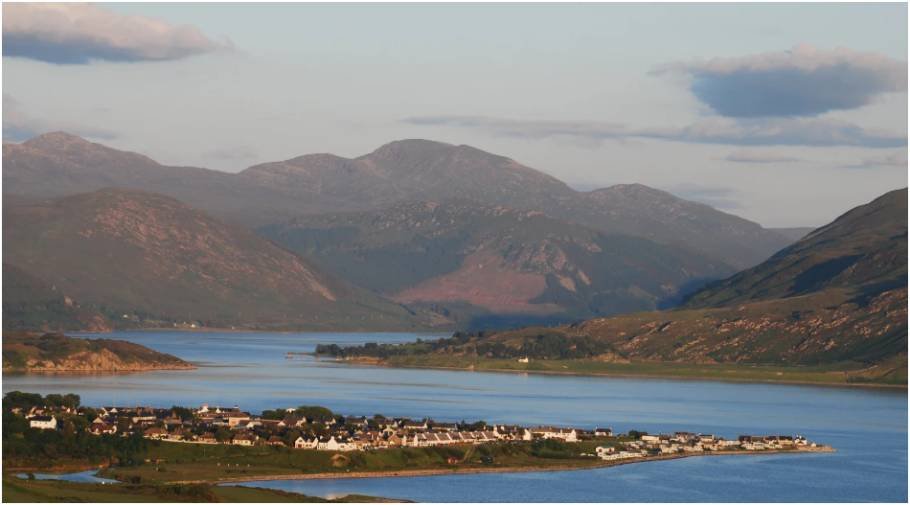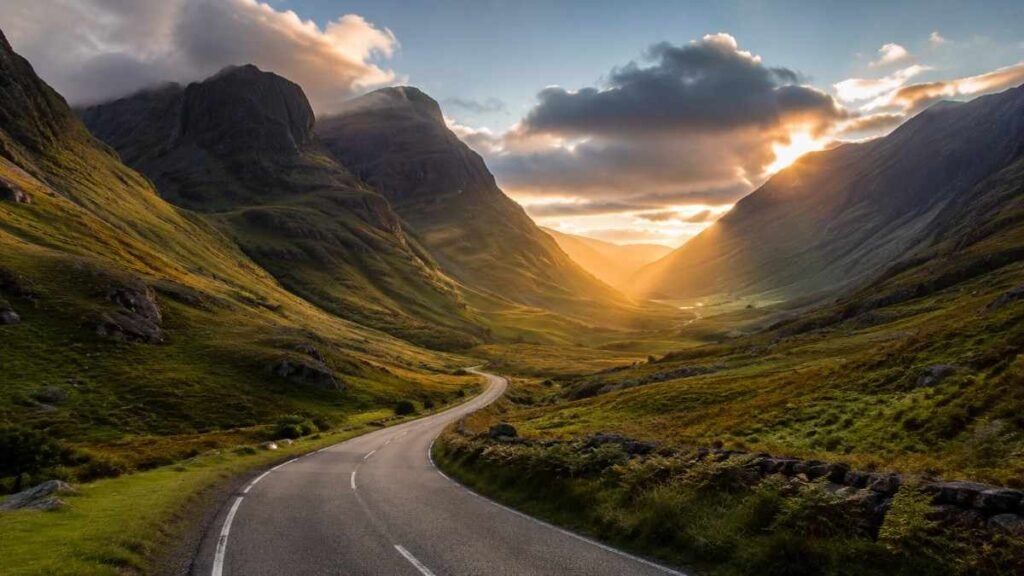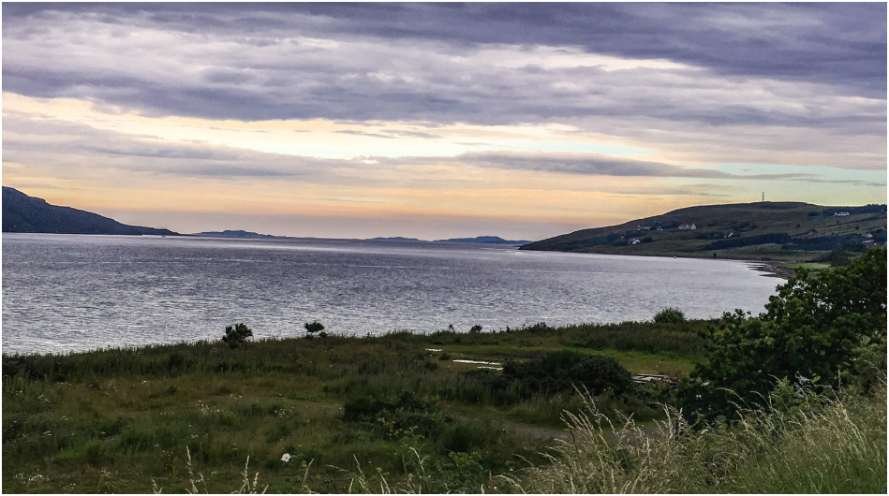
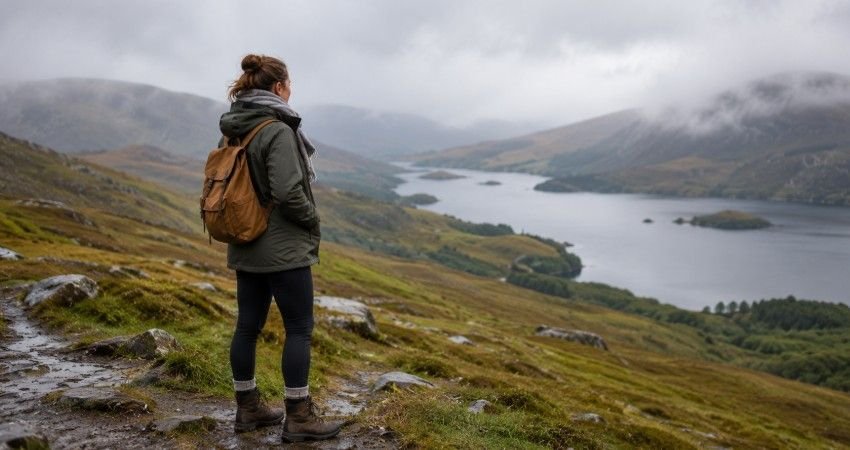
Misty roads, castle stops, windy viewpoints, and surprise rain showers can make packing feel like a guessing game. For anyone planning a road trip, hike, or cozy village escape, knowing what to wear in the scottish highlands helps you stay warm, dry, comfortable, and ready for every wild little weather twist.
Key Takeaways
- Pack waterproof layers for sudden rain.
- Wear sturdy shoes with good grip.
- Use breathable fabrics, not cotton.
- Bring warm accessories year-round.
- Check local forecasts before hiking.
Dress For Highland Weather
Scottish Highlands weather is famous for changing fast, especially around Glencoe, Loch Ness, Fort William, Inverness, and the Isle of Skye. A bright morning can turn breezy and wet before lunch, so your outfit should work in layers rather than depend on one heavy coat.
The best approach is to dress for movement, moisture, and wind chill. Even in summer, exposed viewpoints and mountain passes can feel cool. Instead of packing only cute travel outfits, think about what will keep you dry during a loch walk or warm while waiting for the clouds to clear.
Expect Wind And Rain
Rain is common, but wind is often the bigger surprise. Umbrellas are not very useful on open Highland roads, ferry docks, or cliffside viewpoints because gusts can turn them inside out. A hooded waterproof jacket is much more reliable.
Look for a rain jacket that is waterproof, windproof, and breathable. A longer cut gives extra protection when you sit on damp benches, walk through wet grass, or take photos near misty lochs.
Keep It Casual
The Highlands are relaxed, outdoorsy, and practical. You do not need formal outfits unless you are attending a special event. Most pubs, restaurants, guesthouses, and whisky distilleries welcome smart-casual clothing.
Dark jeans, a neat sweater, waterproof boots, and a good jacket work well for evenings. For daytime travel, comfort matters more than polish, especially if your itinerary includes castles, trails, moors, or roadside viewpoints.
The Three-Layer System
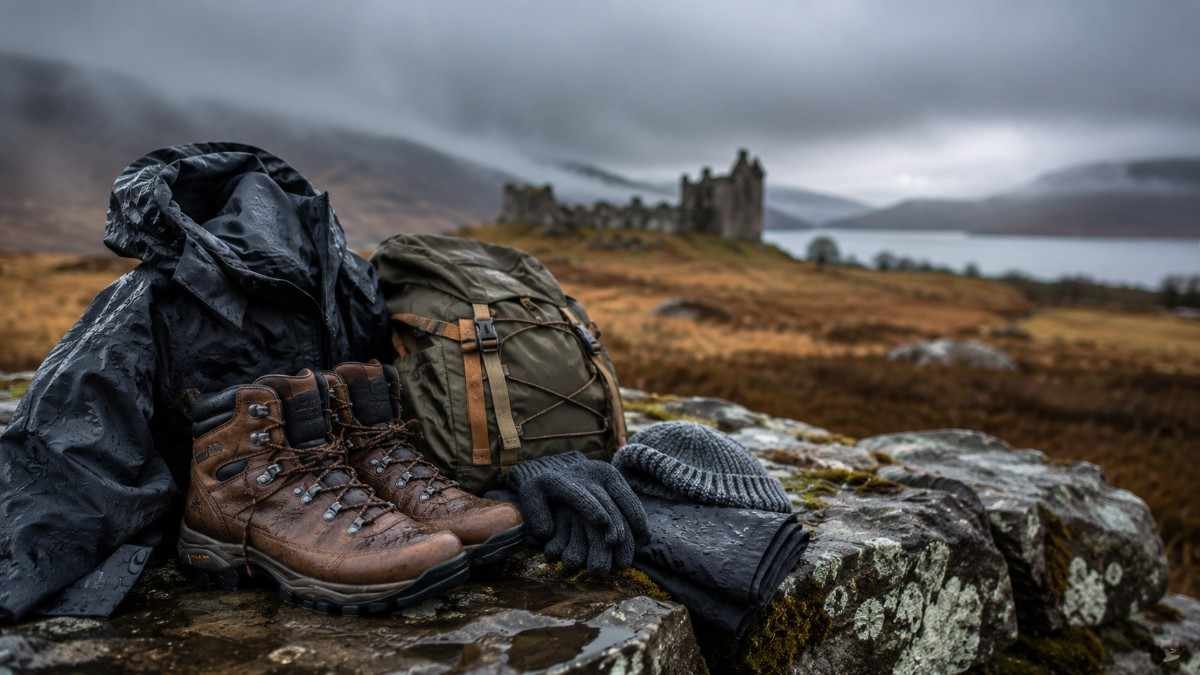
The three-layer system is the easiest way to understand what to wear in the scottish highlands for real-life travel. It keeps you comfortable because each layer has a job: one handles sweat, one keeps you warm, and one blocks rain and wind.
Start with a breathable base layer, add an insulating middle layer, then finish with a waterproof outer shell. This outfit formula works for sightseeing, hiking, road trips, boat rides, and chilly castle visits.
Base Layer
Your base layer should feel soft, light, and breathable. Merino wool and synthetic fabrics are best because they move moisture away from your skin and dry faster than cotton. A long-sleeve base top is useful in spring, autumn, and winter.
Cotton T-shirts are fine for dry town days, but they are not ideal for trails. Once cotton gets wet, it stays damp and can make you cold quickly in Highland wind.
Mid-Layer
Your mid-layer provides warmth without making your outfit bulky. Fleece jackets, wool sweaters, packable down vests, and lightweight insulated jackets are all strong options. These pieces are easy to remove when you step inside a café or visitor center.
Wool is especially fitting in Scotland because it is warm, breathable, and tied to local textile traditions. A simple wool jumper also looks good in pubs, photos, and village stops.
Outer Shell
Your outer shell is your weather shield. A high-quality waterproof rain jacket with a hood is probably the most important item in your suitcase. It should fit comfortably over your sweater or fleece.
For wet hikes or full days outdoors, lightweight waterproof overtrousers are worth packing. They are not glamorous, but they can turn a miserable rainy walk into a manageable one.
The Ultimate Highlands Packing List
A smart Highlands packing list should cover rain, warmth, walking comfort, and quick outfit changes. You do not need to overpack, but every item should earn its place.
Choose versatile pieces that can be worn in different combinations. This helps you travel lighter while still being ready for Inverness streets, Glenfinnan viewpoints, Skye trails, and cozy pub dinners.
Waterproof Essentials
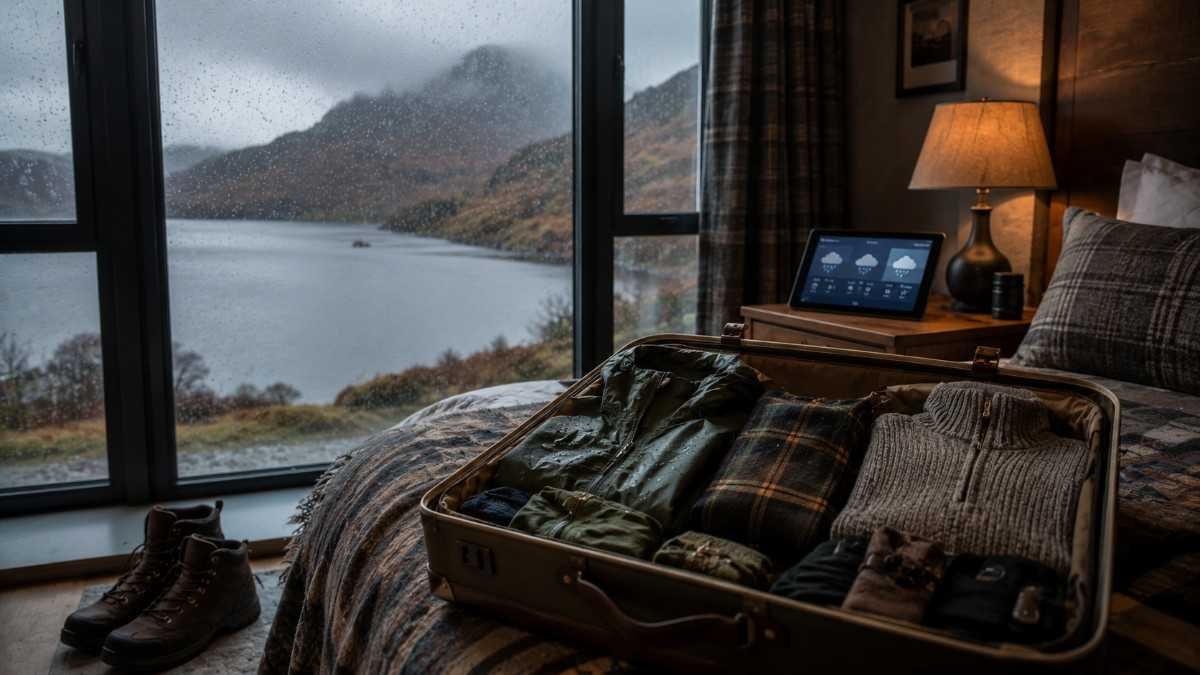
Bring a waterproof outer shell, waterproof walking shoes, and a small water-resistant daypack. These three items protect your body, feet, and valuables when the weather changes quickly.
A daypack is useful for carrying spare socks, gloves, snacks, a camera, midge repellent, and an extra layer. Pick one that is comfortable enough for short hikes and compact enough for sightseeing.
Warm Clothing
Pack fleece, wool, thermal tops, a packable vest, wool socks, a beanie, light gloves, and a scarf. These items are useful in every season because temperatures can drop quickly in the Highlands.
A scarf is especially handy because it adds warmth without taking much space. It also makes a simple outfit look more unique in travel photos.
Practical Bottoms
Quick-dry hiking pants, water-resistant trousers, leggings, and comfortable travel pants are better than heavy denim for wet days. Jeans are acceptable for towns and casual evenings, but they become cold and heavy when soaked.
For longer walks, choose flexible trousers that allow movement. If you plan to hike moors, glens, or muddy paths, carry waterproof overtrousers in your daypack.
Shoes For Highland Travel
Footwear can make or break your Highlands trip. The region includes cobbled castle paths, muddy trails, gravel car parks, wet grass, slippery stones, and uneven moorland.
Waterproof, comfortable shoes with good grip are much better than fashion sneakers. Your feet should stay dry and supported from morning drives to sunset viewpoints.
For Sightseeing
For sightseeing, wear waterproof walking shoes, leather ankle boots, or supportive trail sneakers. These work well for Loch Ness, Inverness, Urquhart Castle, Eilean Donan Castle, and distillery visits.
Break in your shoes before the trip. Even a relaxed Highlands itinerary often includes more walking than expected because every viewpoint invites “just one quick stop.”
For Hiking
For hikes in must see in Scotland Highlands around Glencoe, Ben Nevis, the Isle of Skye, or Highland moors, choose waterproof ankle-high hiking boots. They offer support, grip, and better protection from mud and stones.
Pair them with merino wool or moisture-wicking socks. Avoid cotton socks on hikes because they hold sweat and increase the chance of blisters.
Seasonal And Activity Tips
Your Highland wardrobe should change slightly depending on the season and your plans. Summer road trips, winter escapes, and hiking-heavy itineraries all need different clothing choices.
Still, the main rule remains the same: layers, waterproofs, sturdy footwear, and warm accessories.
 Summer Visitors
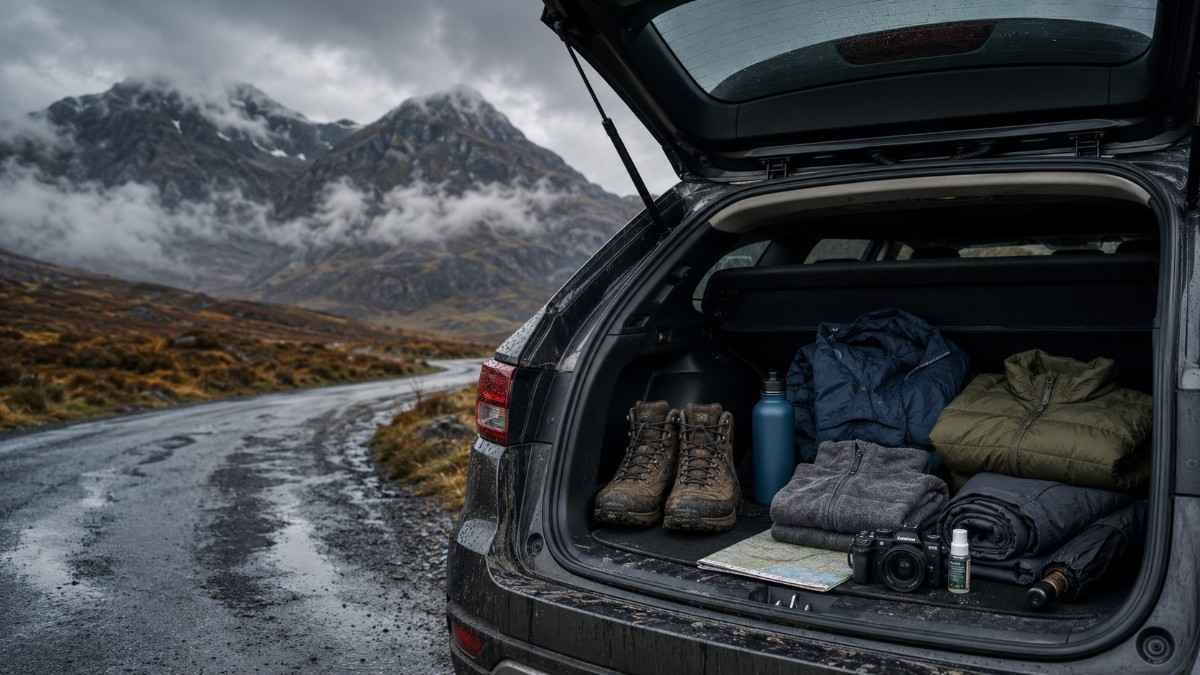
Summer in the Highlands is mild rather than hot. Pack T-shirts, long sleeves, a fleece, waterproof jacket, hiking trousers, and sturdy shoes. Even in July or August, rain and wind are common.
Summer also brings Highland midges, tiny biting insects that gather near still water, woods, and damp areas. Bring repellent such as Smidge and consider a fine mesh head net if you are camping or hiking.
Winter Visitors
Winter visitors should add thermal underlayers, a heavier insulated coat, gloves, a warm hat, and waterproof boots with strong grip. Mountain areas may see snow, ice, and very short daylight hours.
Sightseeing is still beautiful in winter, but you need warmth and traction. Dress for comfort before style, especially around exposed viewpoints and rural roads.
Evening Wear
Evening wear in the Highlands is simple and relaxed. Smart-casual clothes like jeans, a nice sweater, flowy travel dresses, a button-down shirt, or clean boots are perfect for most pubs and restaurants.
Avoid packing too many dressy outfits. One polished look is enough unless your trip includes a formal dinner, wedding, or luxury hotel event.
Check Local Weather First
Before heading out, check reliable local weather and route resources. Highland conditions can shift from calm sunshine to driving rain quickly, especially in mountain and coastal areas.
The Met Office Scotland forecast is useful for daily weather, while Walkhighlands helps with route descriptions, trail difficulty, and terrain notes. Checking both before a hike is a smart habit.
Frequently Asked Questions
1. What Do People Wear In The Scottish Highlands?
People usually wear practical layers, waterproof jackets, sweaters, hiking boots, wool socks, hats, and scarves. For what to wear in the scottish highlands, focus on comfort, warmth, and rain protection.
2. What Is The 3-3-3 Rule For Clothes?
The 3-3-3 rule means packing three tops, three bottoms, and three pairs of shoes or key layers. For the Highlands, choose waterproof, breathable, and warm pieces that mix easily.
3. Is It Acceptable To Wear Jeans In Scotland?
Yes, jeans are acceptable in Scotland for towns, pubs, sightseeing, and casual dinners. For rainy hikes or moorland walks, quick-dry trousers or leggings are better because wet denim feels cold.
4. What Is A Must Buy In Scotland?
A wool scarf, tartan item, local knitwear, whisky, or shortbread makes a lovely Scottish souvenir. In the Highlands, wool and tartan feel especially meaningful because of the region’s heritage.
Final Forecast: Cozy, Dry, And Highland-Ready
The secret to what to wear in the scottish highlands is packing for change, not perfection. Bring breathable layers, a warm fleece or wool sweater, a strong waterproof jacket, sturdy shoes, and simple smart-casual pieces for evenings. The Highlands reward prepared travelers with misty castles, wild glens, quiet lochs, and unforgettable roads, so dress well and enjoy every weather mood.